


Commercial Landscaping Design Ideas for Northern Colorado Businesses

Updated: Mar 16
A successful commercial landscape enhances curb appeal and so much more. It creates a clear sense of order, supports how people move through a space, and holds its visual appeal across all four seasons. In Northern Colorado’s Zone 4b–6a climate, the most successful commercial landscaping designs for 2026 prioritize structure, climate-adapted plantings, and outdoor spaces that welcome everyday use.
Commercial landscapes set the tone before anyone steps inside a building. This year, property owners are seeking designs that feel fresh without being overly trendy by curating spaces that reflect their brand while remaining practical to maintain. The ideas below explore structured landscapes with seasonal interest, refined native plantings, and functional outdoor spaces that enhance usability across offices, campuses, retail environments, and multi-use properties.

Structured Landscapes with Seasonal Interest
Structured planting is a core commercial landscaping idea. Defined beds, repeated patterns, and crisp edges create clarity and visual order. Evergreen anchors and ornamental grasses hold their shape year-round, while flowering perennials add seasonal bursts of color.
Layering plants of varying heights and textures adds depth, creating a sense of fullness without clutter. Trees with strong branching patterns provide structure during winter months, so the landscape retains visual interest even when snow covers the ground.
In addition, structured landscapes help direct foot traffic and highlight key features such as entrances, signage, or architectural elements. Through careful planning of height, spacing, and color progression, designers create a sense of movement through the space, subtly guiding visitors from one area to another. Even small accents like seasonal container plantings can reinforce structure while introducing flexibility for changing colors or textures.
Embracing a combination of structure and seasonal interest works well across property types, from office parks to civic buildings. It communicates professionalism, reinforces the property’s identity, and makes long-term maintenance easier, as staff can follow clearly defined planting layouts.
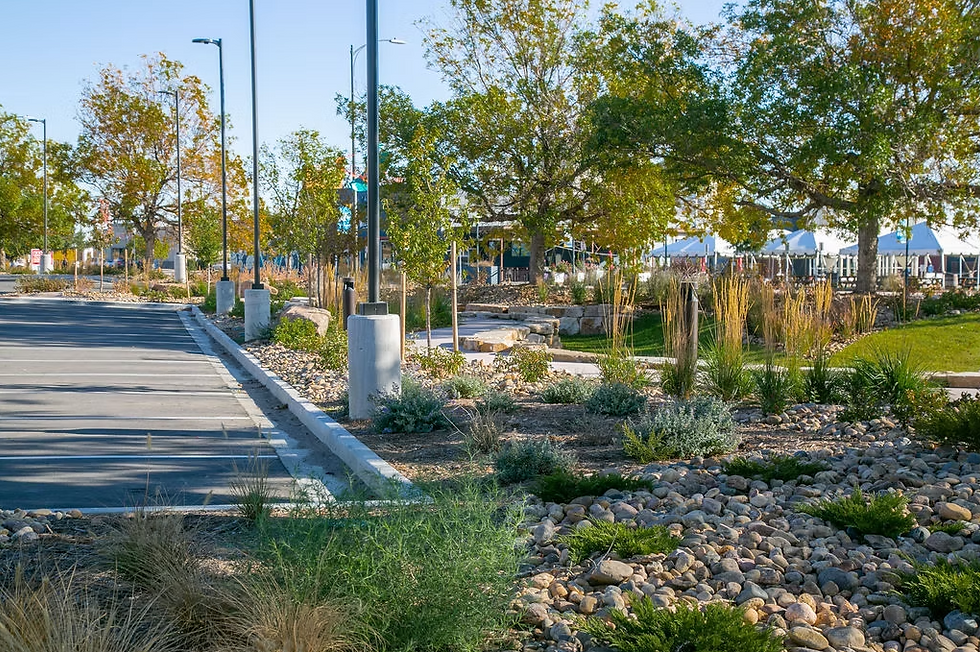
Native and Climate-Adapted Plantings with a Refined Look
Native and climate-adapted plantings continue to shape commercial landscapes across Northern Colorado. In the zones 4b–6a climate, marked by wide temperature swings, intense sun, wind, and periods of limited moisture, these plants are well suited to perform reliably while reducing long-term water use and maintenance demands.
A design-forward approach layers Colorado-adapted grasses, flowering perennials, and shrubs to create texture, movement, and year-round visual interest. The result is a landscape that feels connected to the region’s natural character: prairie, foothills, and open space, while maintaining a polished, professional appearance. Native plantings also support local pollinators, reinforce sustainability goals, and communicate environmental awareness to employees, clients, and visitors.
Thoughtfully composed plant palettes provide seasonal progression throughout the year. Early spring blooms emerge as temperatures rise, summer perennials bring color and vitality, and fall foliage introduces warm tones before winter arrives. Even during colder months, evergreens and ornamental grasses offer structure and visual continuity, standing up to snow and wind. Subtle hardscape elements, such as stone boulders, pathways, or low retaining features, can be integrated to complement native plantings without overpowering their naturalistic feel.
When paired with intentional hardscaping and circulation paths, these landscapes feel cohesive and inviting while remaining practical to maintain. Using locally adapted species also improves winter resilience and reduces replacement costs, helping commercial landscapes remain healthy, consistent, and visually strong season after season.

Functional Outdoor Spaces That Encourage Use
Commercial landscapes commonly include outdoor spaces designed for use, not just aesthetics. Courtyards, seating areas, and widened walkways create opportunities for breaks, informal meetings, and moments of rest.
Successful designs balance openness with privacy. Trees and tall plantings provide shade and a sense of enclosure, while durable hardscape materials make spaces functional year-round. Strategic lighting extends usability into early mornings and evenings, even during colder months when daylight is limited.
These spaces also allow organizations to incorporate amenities that reflect their culture and priorities. For example, flexible seating areas with tables can accommodate outdoor lunches, team gatherings, or quiet reflection. Planters and container gardens can be rotated seasonally to add visual interest, and subtle design cues like pathways, benches, and lighting create a cohesive look that ties into the overall landscape design.
Furthermore, functional areas enhance the property’s value, making it more inviting and memorable for visitors, employees, and clients. When properly designed, outdoor spaces become an extension of the building itself, and operate in support of wellness, productivity, and engagement.

Considerations When Choosing a Commercial Landscape Design
Every property has unique needs. Climate, maintenance capacity, traffic flow, and brand identity all play a role in selecting the right design. Plant selection should reflect realistic care expectations, while hardscape layout, lighting, and accessibility are critical to daily usability. Seasonal changes must be considered to maintain curb appeal throughout the year. A well-designed commercial landscape balances aesthetics with practicality, ensuring the space remains attractive and functional long-term.
When planning a commercial landscape, Bath Landscape can help guide choices for both beauty and functionality. Our team understands the challenges of zones 4b–6a and can create designs that are visually striking, environmentally smart, and built to last.

